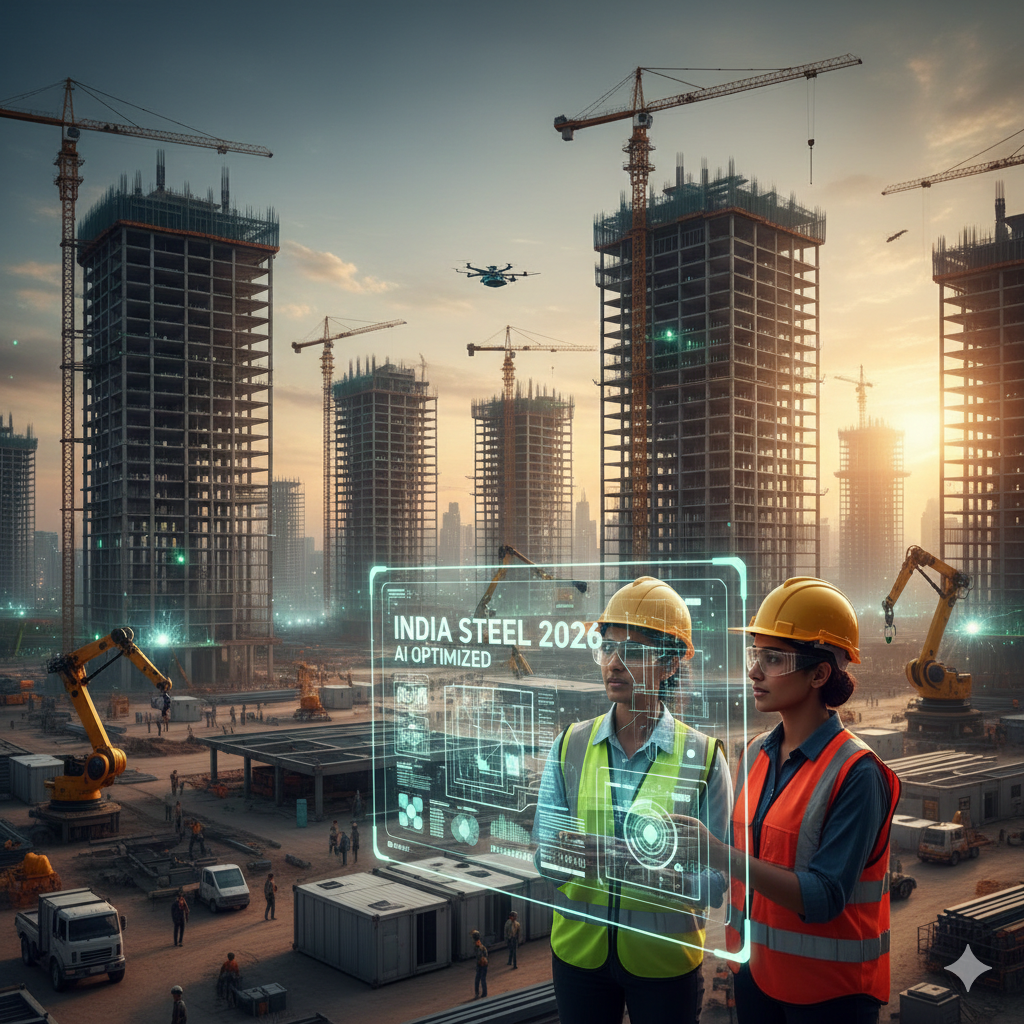
Introduction: A Strong Growth Phase for India’s Steel Industry
The Indian steel market is entering a significant growth phase in 2026, driven by infrastructure expansion, manufacturing recovery, and rising domestic demand. Industry reports indicate that steel consumption in India is expected to grow by around 8–9%, supported by construction, housing, renewable energy, and engineering sectors.
For fabricators, contractors, and builders, understanding these trends is essential to plan procurement strategies, manage costs, and maintain competitive project execution.
Infrastructure Growth Driving Steel Demand
One of the biggest drivers of steel consumption is India’s aggressive infrastructure development. Rapid highway construction, smart city initiatives, and large-scale housing projects are increasing demand for structural steel and coated materials. Steel demand is projected to be significantly higher than previous years due to continued investments in construction and infrastructure expansion.
As infrastructure spreads beyond metro cities into Tier-2 and Tier-3 regions, the need for reliable steel supply chains is growing. Builders and industrial buyers are focusing more on consistent quality and timely delivery to meet fast-paced project timelines.
Rising Production and Capacity Expansion
India remains one of the fastest-growing steel markets globally, with production capacity steadily increasing. The country is already among the world’s largest steel producers, and ongoing investments aim to expand capacity further in the coming years.
Reports suggest that crude steel output and deliveries are likely to grow as mills expand operations to meet rising demand from manufacturing and infrastructure sectors.
For fabricators, this means improved availability of materials such as CR coils, HR sheets, GI steel, and stainless steel — but also the need to monitor pricing and supply trends carefully.
Price Trends and Market Challenges
While demand remains strong, steel prices and margins may fluctuate due to raw material costs, global trade policies, and logistics challenges. Industry analysts expect stable but competitive market conditions, with operating margins remaining relatively flat despite demand growth.
Additionally, export markets are evolving, with Indian manufacturers exploring new regions due to changing environmental regulations and trade dynamics.
Builders and fabricators should stay informed about price movements to plan bulk purchases strategically.
Digital Procurement and Supply Chain Transformation
Another major trend in 2026 is the digitization of steel procurement. Businesses increasingly rely on online platforms and B2B marketplaces to compare suppliers, check stock availability, and streamline purchasing. Efficient logistics and faster delivery networks are becoming key competitive advantages for steel distributors.
This shift is encouraging buyers to work with dependable suppliers who maintain transparent sourcing and consistent inventory.
Conclusion: What Fabricators and Builders Should Focus On
The steel market in India is expected to remain strong in 2026, supported by infrastructure growth, manufacturing expansion, and increasing consumption. For builders and fabricators, the focus should be on sourcing certified materials, monitoring market price trends, and building relationships with reliable suppliers.