 Blog
Blog
Steel Coil Slitting: Process, Benefits and Industrial Applications
Steel coil slitting is an important steel processing method used to convert wide steel coils into narrower strips for specific manufacturing requirements. For industries that work with sheet metal, automotive components, electrical equipment, fabrication and industrial products, the correct strip width and material specification can directly affect production efficiency.
Understanding the steel coil slitting process helps manufacturers make informed decisions about material selection, dimensional requirements and steel procurement. This guide explains how coil slitting works, its major benefits and the factors industrial buyers should consider before sourcing steel coils.
What Is Steel Coil Slitting?
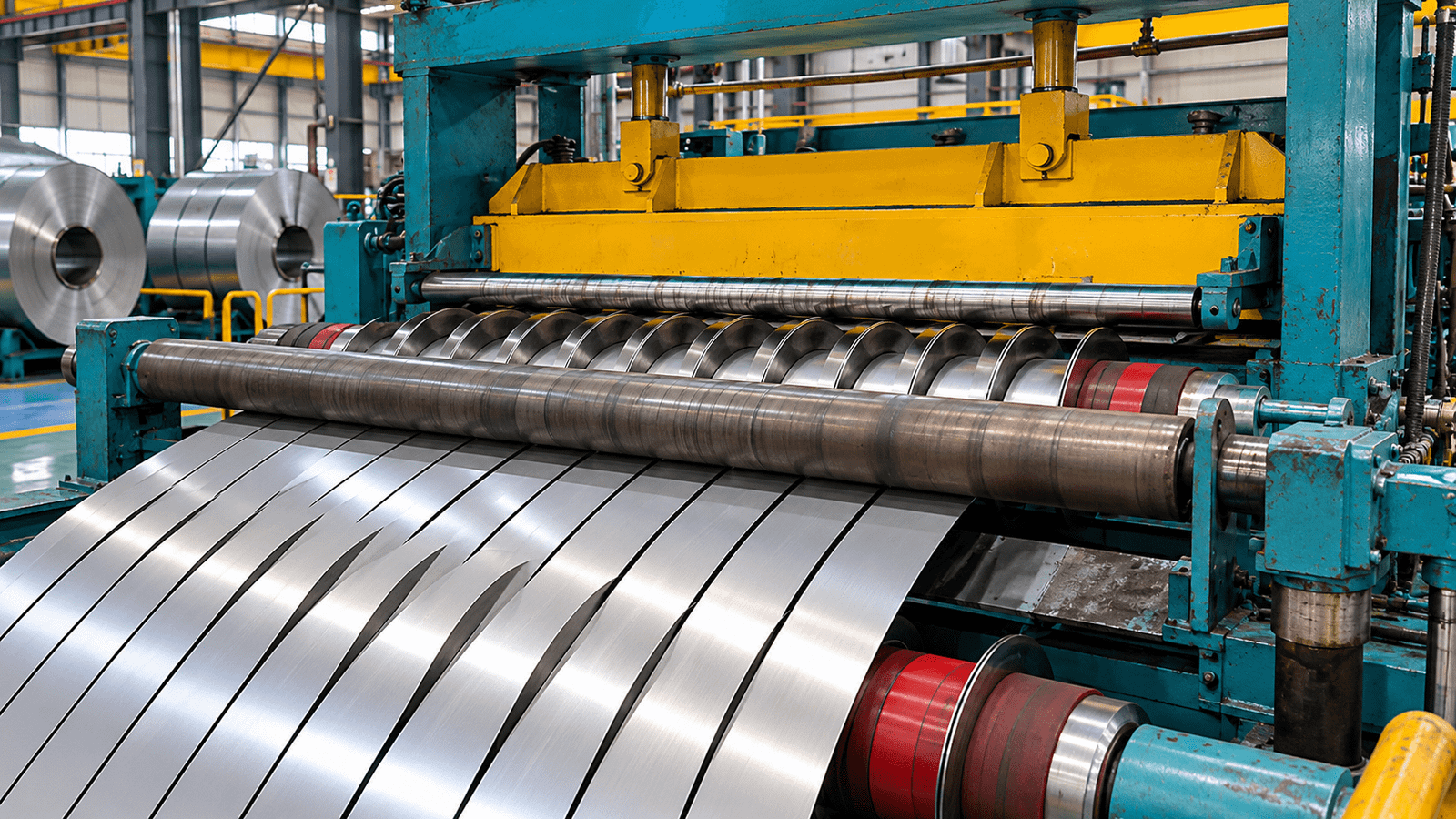
Steel coil slitting is a process in which a wide steel coil is passed through a slitting line and cut longitudinally into multiple narrower strips. The strips are then recoiled into individual coils for storage, transportation or further manufacturing.
The process uses circular rotary knives arranged according to the required strip widths. Depending on the equipment, material thickness and production requirements, a single wide coil can be divided into several narrower coils in one operation.
Unlike shearing, which cuts material across its width, slitting produces continuous narrow strips along the length of the coil.
How Does the Steel Coil Slitting Process Work?
The exact setup varies depending on the steel grade, thickness and required dimensions. However, a typical steel coil slitting process involves the following stages.
1. Coil Loading and Uncoiling
The parent steel coil is loaded onto an uncoiler. The strip is fed into the processing line under controlled tension to maintain consistent material movement.
2. Material Alignment and Levelling
The steel strip is guided and aligned before cutting. Depending on the equipment and material requirements, levelling or other preparation may be used to improve material handling and strip consistency.
3. Slitting Through Rotary Knives
Rotary knives cut the wide steel strip lengthwise into narrower strips. Knife spacing is set according to the required widths, material thickness and applicable tolerances.
4. Strip Separation and Tension Control
The newly slit strips are separated and guided through the line. Appropriate tension control helps reduce strip wandering, uneven winding and handling issues.
5. Recoiling and Inspection
The finished strips are wound into separate coils. Their widths, edge condition, winding quality and other specified requirements can then be checked before dispatch or further processing.
Key Benefits of Steel Coil Slitting
1. Material Widths Matched to Production Needs
Manufacturers often require specific strip widths rather than the full width of a parent coil. Slitting makes it possible to prepare material in dimensions suited to a particular production process, subject to equipment capabilities and specifications.
2. Improved Material Utilisation
Planning strip widths around component dimensions can help reduce unnecessary offcuts and improve material utilisation. Actual savings depend on the nesting or width plan, kerf loss, edge trim, production tolerances and the end product.
3. Consistency Across Production Runs
When the slitting line is correctly configured and maintained, it can produce strips with consistent widths and repeatable dimensions. This is particularly useful for manufacturers who need predictable input material for recurring production orders.
4. Easier Handling and Downstream Processing
Narrower coils can be more suitable for operations such as roll forming, stamping, tube manufacturing and component fabrication. The correct coil size and weight can also help streamline handling, provided the material is compatible with the downstream equipment.
5. Better Alignment with Manufacturing Requirements
Choosing the correct steel grade, thickness and strip width before production helps buyers align incoming material with their manufacturing specifications and quality requirements.
Which Steel Materials Can Be Slit?
Steel coil slitting can be used for various flat steel products, provided the material properties and dimensions are compatible with the processing equipment.
- Cold rolled steel: Used in applications requiring controlled thickness, surface finish and dimensional accuracy.
- Hot rolled steel: Used in fabrication and industrial applications where its specified mechanical properties and surface condition are suitable.
- Galvanized steel: Used in applications requiring a zinc-coated steel surface, with appropriate care taken to protect the coating during processing.
- Pre-painted and colour-coated steel: May be slit for suitable applications, provided the coating and handling requirements are considered.
- Stainless steel: Can be slit for applications requiring corrosion resistance and specific material grades, using suitable tooling and handling practices.
Not every processing line can handle every material or thickness. Buyers should confirm the grade, coil dimensions, thickness range, coating requirements and processing capabilities before placing an order.
Industries That Use Slit Steel Coils
Slit steel strips are used across a range of manufacturing sectors. Common applications include:
- Automotive components: Selected metal parts, brackets and formed components.
- Electrical equipment: Enclosures, panels and suitable fabricated components.
- Tube and pipe manufacturing: Strip material used as feedstock for compatible forming and welding lines.
- Construction and fabrication: Metal profiles, sections and fabricated products.
- Appliance manufacturing: Components made from steel strips with specified material and surface properties.
- General engineering: Parts manufactured through stamping, roll forming and other metalworking processes.
The suitability of slit steel for each application depends on the material grade, thickness, strip width, mechanical properties and the requirements of the finished component.
How to Choose the Right Steel Coil for Processing
Before sourcing steel coils for slitting or other manufacturing operations, buyers should review the following factors.
- Steel grade: Confirm that the material meets the technical requirements of the finished product.
- Thickness: Specify the required thickness and applicable tolerances.
- Parent coil width: Check whether the available coil width can accommodate the required strip-width plan.
- Surface and coating: Identify any finish, coating or surface-quality requirements.
- Strip width and tolerance: Define the finished dimensions and permissible variation clearly.
- Coil weight and dimensions: Ensure compatibility with handling, transport and downstream equipment.
- Documentation and inspection: Confirm the required material certificates, inspection criteria and traceability documents.
- Supply reliability: Work with a supplier that can clearly communicate material specifications, availability and delivery schedules.
Clear specifications reduce the risk of ordering unsuitable material and help procurement teams coordinate more effectively with production and quality-control departments.
Steel Coil Slitting and Material Waste Reduction
Reducing material waste begins with planning. Manufacturers should calculate the required strip widths, account for knife clearances and edge trim, and evaluate how the slit strips will be used in subsequent operations.
For example, if a manufacturer needs several narrow strips from a wide parent coil, a carefully planned width combination may improve usable material yield. However, the best arrangement depends on the order dimensions, cutting limitations, required tolerances and the treatment of edge scrap.
Slitting alone does not guarantee lower material costs. Buyers should assess the total cost of usable material, processing, transport, scrap recovery and any additional quality requirements when comparing supply options.
Frequently Asked Questions
What is steel coil slitting?
Steel coil slitting is a longitudinal cutting process that converts a wide steel coil into multiple narrower strips using rotary knives.
What is the main purpose of coil slitting?
Its main purpose is to produce steel strips in specified widths for downstream manufacturing, fabrication and forming operations.
Does steel coil slitting reduce material waste?
It can improve material utilisation when strip widths are planned efficiently. The actual reduction in waste depends on the material dimensions, cutting plan, edge trim and production requirements.
Which steel grades can be slit?
Cold rolled, hot rolled, galvanized, stainless and suitable colour-coated steel products can be slit when their specifications are compatible with the processing line.
What information should buyers provide when sourcing steel coils?
Buyers should specify the steel grade, thickness, width, coating or surface finish, required quantity, tolerances and any documentation requirements.
Conclusion
Steel coil slitting helps manufacturers obtain narrower steel strips suited to their production requirements. Understanding the process, material specifications and width-planning considerations can support better purchasing decisions, more consistent input materials and improved material utilisation.
For businesses sourcing steel coils and flat products, choosing the right material specification and a reliable supply partner is an important part of production planning. Explore the range of steel sheets, coils and flats supplied by Sandeep Metal Works to learn more about the available steel product categories.
Looking for Steel Coils for Your Manufacturing Requirements?
Discuss your required steel grade, thickness, dimensions and quantity with Sandeep Metal Works to identify a suitable material supply option.