 Quality Meterials
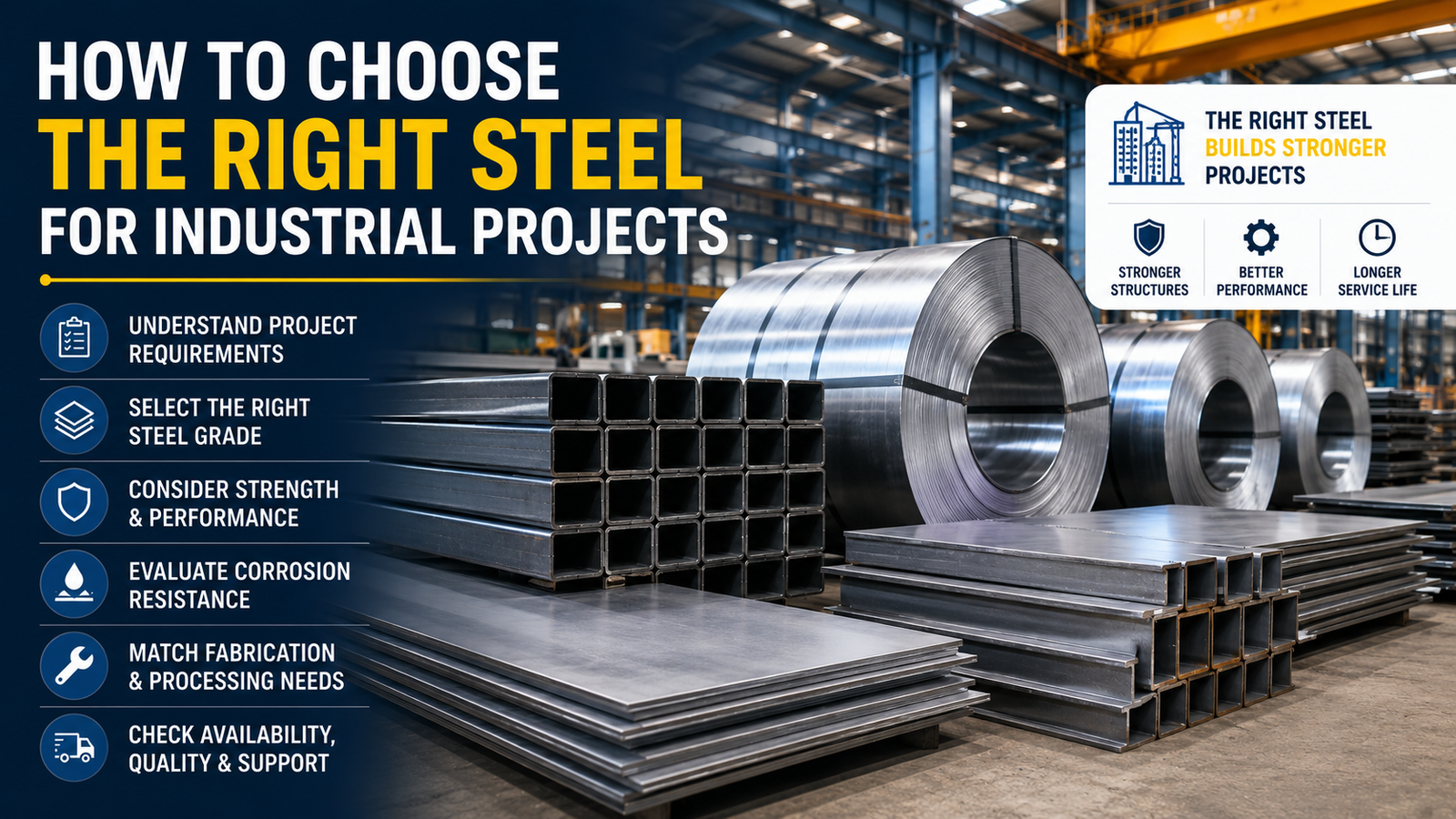
How to Choose the Right Steel for Industrial Projects
A lower purchase rate does not always mean lower project costs, especially when the material creates extra work during cutting, forming, welding, or finishing. Extra cutting, difficult bending, welding problems, material wastage, or the wrong surface condition can quickly increase the actual cost of a project.
Industrial steel selection should begin with the work the material must perform. A sheet used for an electrical enclosure has little in common with a plate required for a heavy machine base. Both are steel products, but the demands placed on them are different.
Understanding How to Choose the Right Steel for Industrial Projects means looking beyond price and availability. Buyers need to consider application, grade, strength, exposure conditions, fabrication method, dimensions, surface requirements, supply form, documentation, and delivery planning.
Start With The Application And Working Conditions
Begin by identifying the exact purpose of the finished component rather than limiting the choice to materials currently in stock.
1. Define The Final Application
Start with the finished component. Will it become a machine part, enclosure, structural member, platform, duct, frame, or outdoor installation?
This matters because different jobs demand different characteristics. Precision components may require controlled dimensions and a cleaner surface. Structural work may place greater importance on strength, thickness, welding suitability, and design requirements.
A clear understanding of the final use is the foundation of How to Choose the Right Steel for Industrial Projects.
2. Examine The Service Environment
Steel used inside a controlled production area faces different conditions from material installed outdoors or near moisture and chemicals.
Check for humidity, water contact, temperature changes, chemicals, abrasion, and weather exposure. Depending on the application, the project may call for galvanized steel, stainless steel, coated material, or another specified protection system.
Environmental conditions should be considered before purchase rather than after signs of deterioration appear.
3. Understand The Load Requirement
Consider how the finished component will be used. Will it support constant weight, experience vibration, receive repeated loads, or face impact?
Material selection should follow approved technical requirements. Choosing a higher-strength grade without understanding its forming and welding behavior can create new production challenges.
For structural or safety-critical applications, engineering drawings, applicable standards, and approved specifications should guide the final decision.
Compare Steel Types And Grades Carefully
Different steel categories are suited to different jobs. Selecting the correct family of material narrows the choice, but the exact grade still needs to be verified.
4. Choose The Appropriate Steel Type
Cold Rolled Steel is commonly considered for components where controlled dimensions and surface condition are important. Electrical panels, equipment covers, furniture components, appliances, and precision-fabricated parts are typical examples.
Hot Rolled Steel is widely used for structural fabrication, machinery, infrastructure, and general engineering work. It is available in coils, sheets, and plates for different processing requirements.
For applications exposed to moisture or weather, zinc-coated steel can provide an added barrier against surface corrosion. Stainless Steel is selected for many applications involving corrosion resistance, hygiene, or appearance.
MS Plates, Flats, and Chequered Plates support fabrication, machinery, structural work, platforms, walkways, and other industrial uses.
For anyone studying How to Choose the Right Steel for Industrial Projects, the important point is simple: choose according to function, not familiarity.
5. Confirm The Exact Grade
Two steel products can appear similar while behaving differently during bending, welding, machining, or service. That is why a purchase enquiry should never rely only on broad terms such as “HR sheet” or “SS plate.”
When requesting a quote, provide complete material details, including the required product, grade, dimensions, order volume, technical standard, finish, processing scope, and certification requirements.
Precise specifications reduce confusion between procurement teams, suppliers, and fabrication departments.
Match The Material With Your Fabrication Process
Steel does not go directly from a warehouse to a finished project. It may pass through several workshop operations first.
6. Review Cutting And Forming Needs
Before ordering, consider whether the material will be slit, cut, bent, pressed, punched, or machined.
A production unit making repetitive formed parts may value dimensional consistency and predictable processing. A heavy fabrication workshop may focus more on plate dimensions, welding requirements, and material handling.
A key part of How to Choose the Right Steel for Industrial Projects is connecting the purchase decision with the actual production route.
7. Check Welding Requirements Early
Welding performance depends on several factors, including material grade, thickness, joint design, and the selected welding process.
Procurement and production teams should confirm material suitability before placing a bulk order. For demanding applications, project-specific welding procedures and inspection requirements may also apply.
Solving these questions before delivery is far more efficient than discovering a fabrication issue after production has started.
8. Select A Useful Supply Format
Steel may be supplied as coils, sheets, plates, flats, slit coils, or cut-to-length material.
The best format depends on production equipment and order volume. A continuous production line may work efficiently with coils, while a fabrication unit may prefer sheets or plates supplied closer to the dimensions shown in the drawing.
Choosing a practical supply format can reduce handling, repeated cutting, and avoidable offcuts.
Evaluate Quality, Supply And Total Procurement Value
The right material specification is important, but reliable procurement also depends on what happens between order confirmation and delivery.
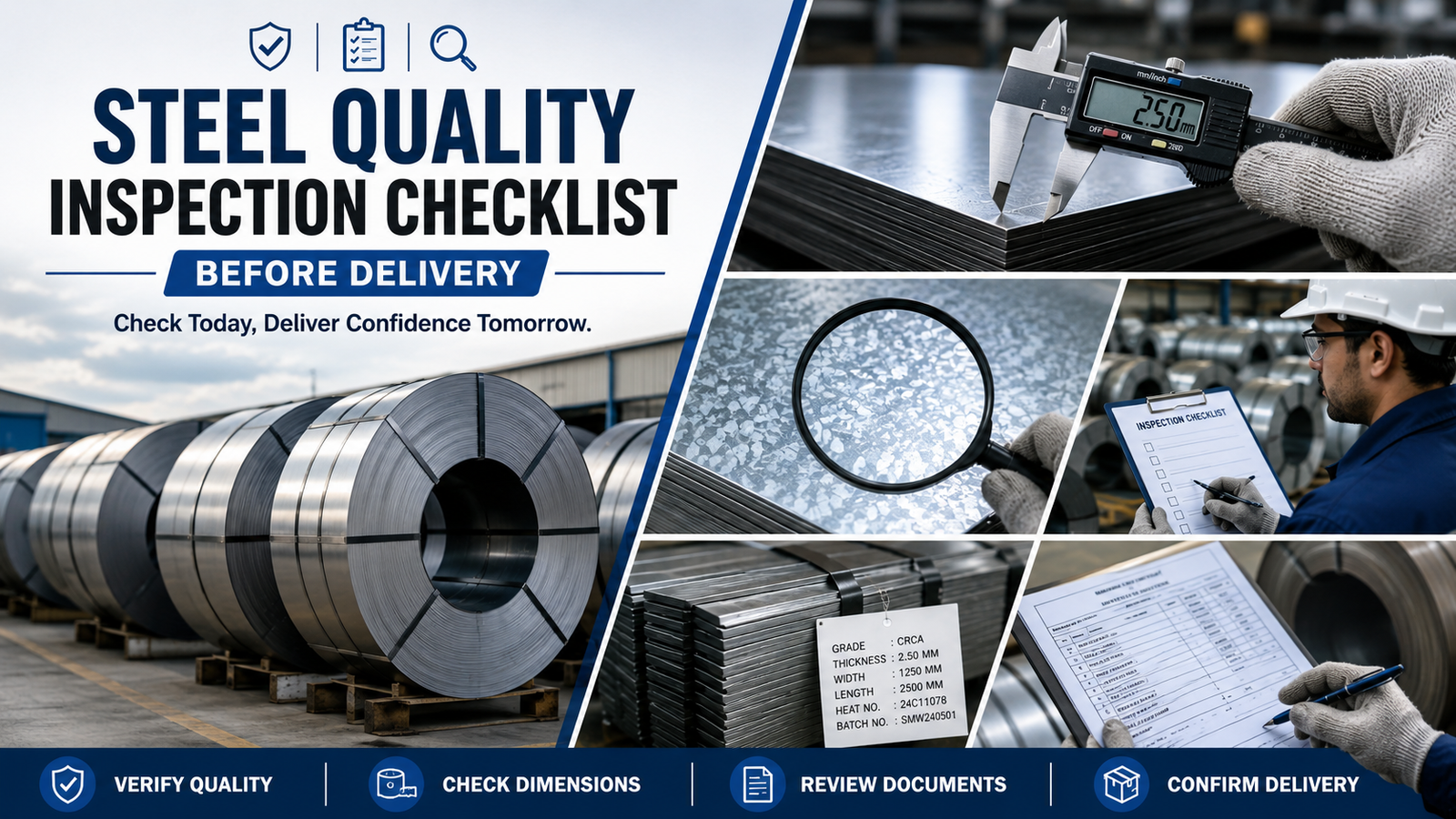
9. Verify Documentation And Traceability
Some projects require material documentation for quality control or traceability. Buyers should discuss these requirements when requesting a quotation.
Where applicable, documentation can help verify important material details. Requirements vary by product and project, so they should be confirmed before ordering rather than requested as an afterthought.
This is an often-overlooked part of How to Choose the Right Steel for Industrial Projects, particularly for projects with formal quality procedures.
10. Consider Processing, Availability And Delivery
Material price should not be evaluated in isolation. Processing accuracy, stock availability, packing, warehousing, and dispatch planning can affect the real cost of procurement.
A low initial rate may lose its advantage if the material creates excessive scrap, requires additional preparation, or reaches the workshop after the planned production date.
Experienced buyers compare the complete purchasing outcome: correct material, usable dimensions, suitable processing, required documentation, and dependable delivery.
Conclusion
Understanding How to Choose the Right Steel for Industrial Projects requires more than comparing grades on a product list. The right decision connects material properties with the finished application, workshop process, working environment, and supply plan.
Begin with the job the steel must perform. Confirm the grade and dimensions. Review forming and welding requirements. Consider environmental exposure and select a supply format that suits production.
When these decisions are made before ordering, procurement becomes clearer, fabrication planning improves, and the risk of avoidable material-related problems is reduced.
Contact Us Today to discuss your material specifications, processing requirements, quantities, and delivery needs with our team.
Frequently Asked Questions
1. What should I check before buying steel for an industrial project?
Check the required grade, thickness, dimensions, strength needs, environmental exposure, fabrication process, surface requirements, and applicable project standards.
2. When should Cold Rolled Steel be selected?
Cold Rolled Steel is commonly considered for components requiring controlled dimensions, a cleaner surface, and suitability for precision forming or further finishing.
3. Where is Hot Rolled Steel commonly used?
Hot Rolled Steel is widely used in structural fabrication, machinery, construction, infrastructure, equipment manufacturing, and general engineering work.
4. Why should environmental exposure be considered?
Moisture, weather, chemicals, and temperature can affect steel performance. Material and protection systems should be selected according to actual service conditions.
5. Why is supply format important when ordering steel?
The correct supply format can simplify handling and processing. Coils, sheets, plates, flats, and cut-to-length materials suit different production methods and equipment.