 Quality Meterials
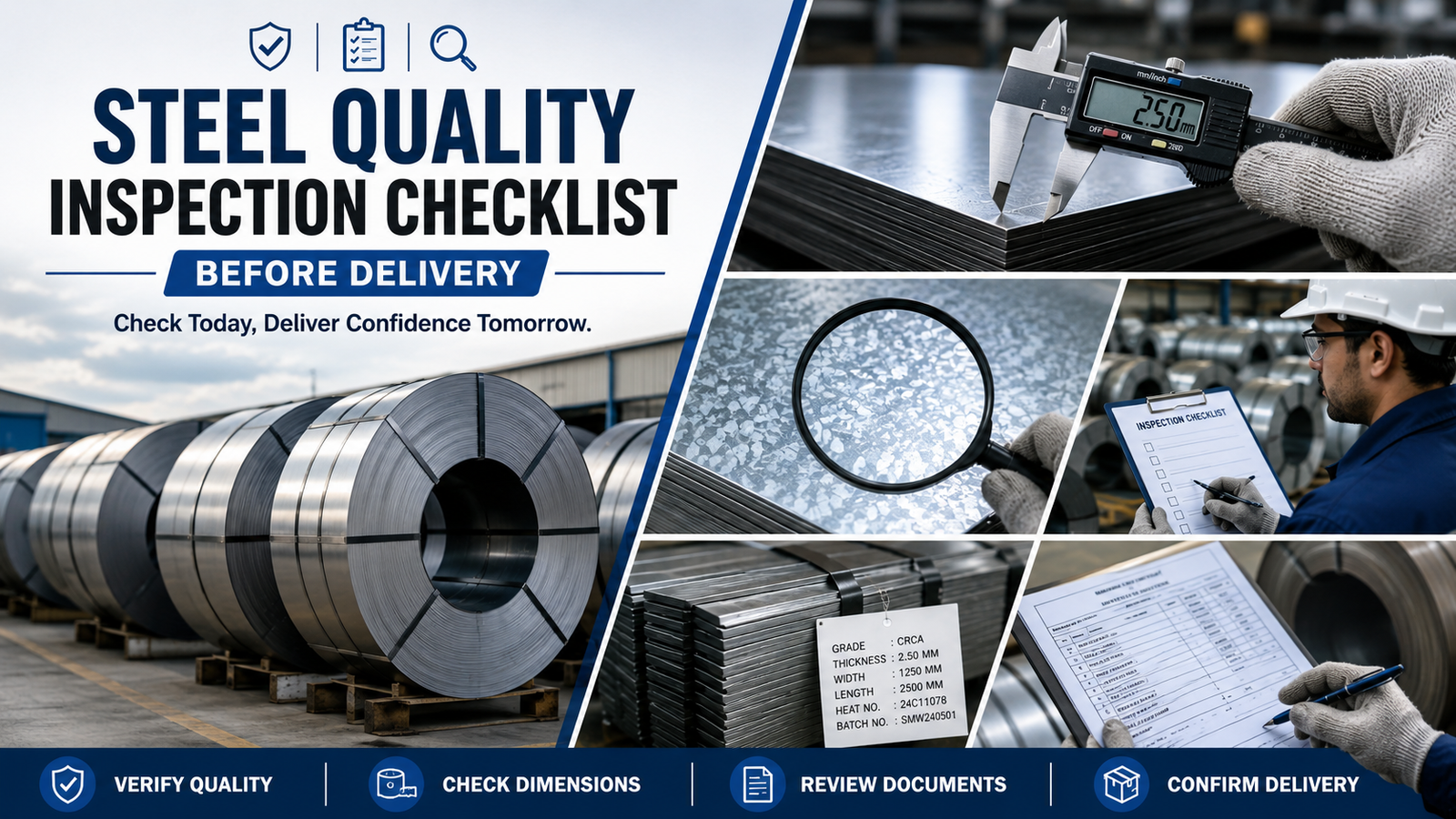
Steel Quality Inspection Checklist Before Delivery
Ordering quality steel is only the first step in a successful project. The next critical step is verifying that the delivered material matches the specifications agreed upon before fabrication or installation begins. Even when purchasing from trusted suppliers, every shipment should undergo a systematic inspection to ensure consistency, compliance, and usability.
A well-planned Steel Quality Inspection Checklist Before Delivery helps contractors, fabricators, manufacturers, procurement teams, and quality inspectors identify issues before the material reaches production. Detecting defects early reduces project delays, minimizes rework, prevents unnecessary costs, and ensures smoother operations.
This guide outlines the essential checkpoints that should be completed before accepting any steel delivery.
Why Is Steel Inspection Important Before Delivery?
Steel is used in structural construction, fabrication, machinery, automotive components, infrastructure, and industrial manufacturing. Any variation in material quality can affect production efficiency and finished product performance.
Inspecting steel before acceptance helps you:
- Verify the material matches the purchase order.
- Reduce fabrication and installation issues.
- Prevent production delays.
- Maintain consistent quality standards.
- Ensure traceability and compliance.
- Minimize replacement and repair costs.
A structured inspection process also strengthens communication between suppliers and project teams.
1. Verify Material Specifications
The inspection should begin by comparing the delivered material with the purchase order and project specifications.
Confirm:
- Steel type
- Material grade
- Thickness
- Width
- Length
- Coil or sheet size
- Quantity supplied
Even minor differences in grade or dimensions can affect fabrication accuracy and project performance.
2. Inspect Surface Quality
A visual inspection helps identify damage before the material enters production.
Check for:
- Rust
- Dents
- Deep scratches
- Edge damage
- Surface cracks
- Oil contamination
- Handling marks
- Uneven finish
Cold-rolled steel should have a smooth and consistent surface.
Galvanized products should have a uniform zinc coating without exposed steel or peeling. Early identification of surface defects prevents problems during welding, painting, and fabrication.
3. Measure Dimensions Accurately
Never rely only on supplier labels.
Measure:
- Thickness
- Width
- Length
- Flatness
- Squareness
- Coil weight (if applicable)
Take dimensional readings with properly verified instruments and confirm that the results fall within the project’s permitted limits. Accurate dimensions reduce production errors and improve fabrication efficiency.
4. Examine Protective Coatings
For coated steel products, examine the coating condition closely for any visible damage, uneven areas, or exposed sections.
For galvanized steel, verify:
- Uniform coating
- No peeling
- No exposed steel
- No excessive white rust
- Consistent surface appearance
The coating should remain intact throughout transportation and handling.
5. Confirm Product Identification
Every bundle, sheet, or coil should carry proper identification.
Verify:
- Heat number
- Batch number
- Product label
- Manufacturer name
- Material grade
- Coil identification
Proper identification supports traceability throughout production and future maintenance.
6. Review Documentation
Documentation should always match the delivered material.
Verify:
- Material Test Certificate (MTC)
- Delivery Challan
- Purchase Order
- Packing List
- Inspection Reports (if required)
- Manufacturer certifications
Any discrepancies should be clarified before unloading.
7. Inspect Packaging and Transportation
Transportation damage can reduce material quality even if the steel leaves the mill in perfect condition.
Inspect for:
- Torn packaging
- Water exposure
- Bent corners
- Damaged edges
- Loose strapping
- Improper stacking
Well-packed material is less likely to suffer damage during transit.
8. Verify Quantity
Count the supplied material before acceptance.
Check:
- Number of bundles
- Number of sheets
- Number of coils
- Total weight
Verify the actual shipment against the ordered quantity to identify any shortages or excess material before acceptance.
Recording shortages immediately helps avoid future disputes.
9. Confirm Fabrication Readiness
Before approving the shipment, ensure the material is suitable for production.
Verify that it:
- Meets dimensional tolerances
- Matches required specifications
- Has acceptable surface quality
- Can proceed directly to fabrication
Identifying problems before production saves valuable time.
10. Document Inspection Results
Every inspection should be properly recorded.
Include:
- Inspection date
- Inspector name
- Supplier information
- Material details
- Photos of defects
- Corrective actions
- Final approval status
Inspection records improve accountability and support future procurement decisions.
Best Practices for Steel Inspection
Experienced procurement teams follow standardized inspection procedures for every delivery.
Recommended practices include:
- Inspect materials immediately after arrival.
- Use calibrated measuring equipment.
- Compare deliveries with purchase orders.
- Photograph visible defects.
- Verify all supporting documents.
- Separate non-conforming materials.
- Report issues before fabrication starts.
- Maintain complete inspection records.
Following these inspection practices helps improve quality control and supports consistent material performance across different projects.
Conclusion
A detailed Steel Quality Inspection Checklist Before Delivery helps ensure that every shipment meets project specifications before it reaches the production floor. Verifying dimensions, surface quality, protective coatings, documentation, and quantity reduces the risk of fabrication issues, project delays, and unnecessary costs.
By following a structured inspection process, contractors, manufacturers, and procurement teams can improve quality control, protect their investment, and maintain efficient project execution from delivery to installation.
Contact Us Today
Looking for premium-quality steel sheets, coils, plates, and structural steel products? Sandeep Metal Works supplies high-quality steel sourced from leading manufacturers with reliable processing, warehousing, and timely delivery.
Get in touch with our team to discuss your required steel products, quantities, and specifications, and request a project-specific quote.
Frequently Asked Questions
1. Why should steel be inspected before delivery?
Inspecting steel before acceptance helps verify quality, dimensions, documentation, and compliance with project specifications.
2. What documents should accompany a steel shipment?
A steel shipment should include the Material Test Certificate, delivery challan, packing list, purchase order reference, and any required inspection reports.
3. What surface defects should be checked?
Look for rust, scratches, dents, edge damage, cracks, coating defects, and signs of mishandling during transportation.
4. Why is material traceability important?
Traceability helps identify the steel grade, manufacturing batch, and source, supporting quality assurance and future reference.
5. What should be done if defects are found during inspection?
Document the issue with photographs, notify the supplier immediately, and avoid using the material until the concern has been reviewed and resolved.