 Quality Meterials
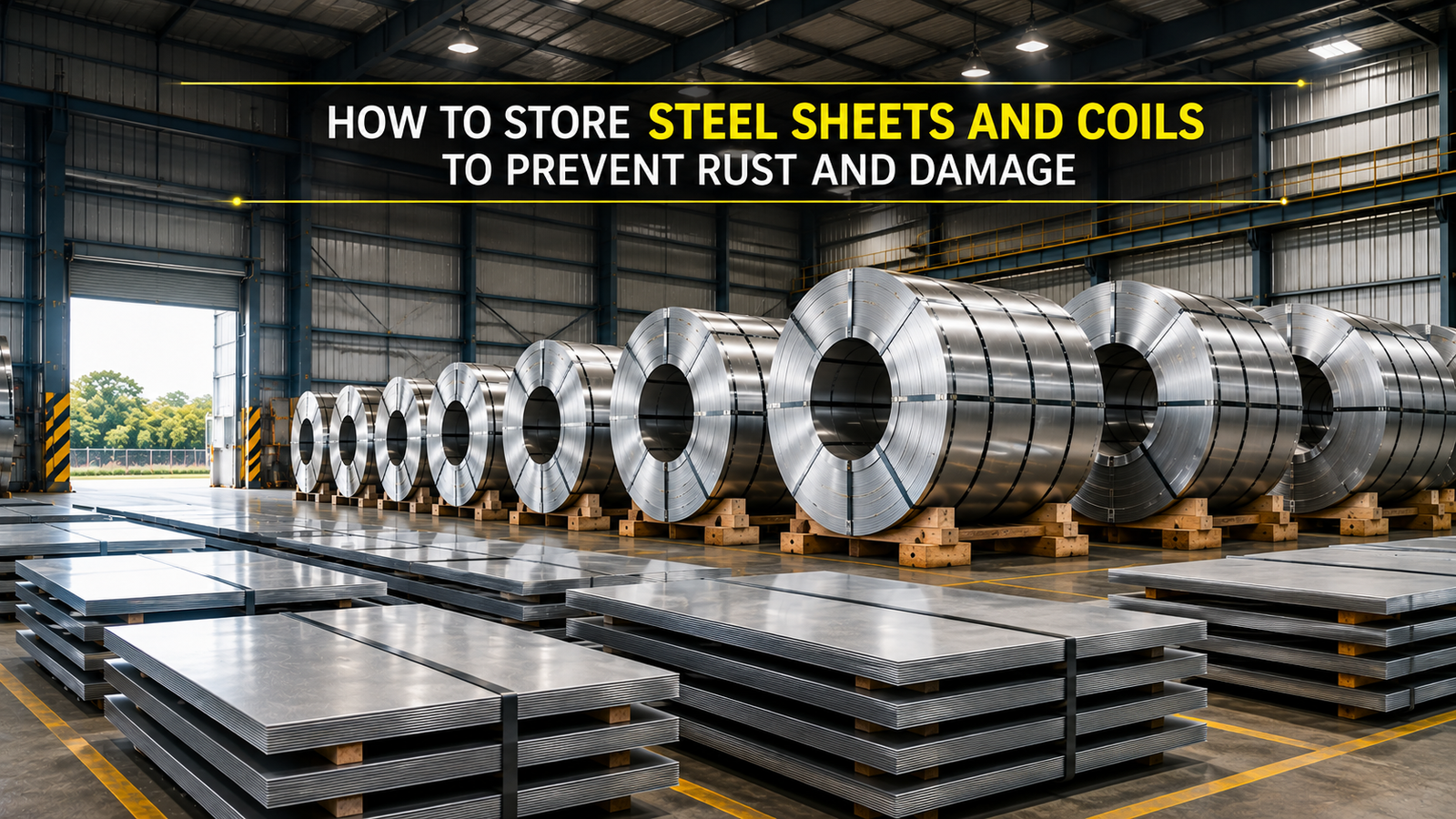
How to Store Steel Sheets and Coils to Prevent Rust and Damage
Steel products can lose their quality before they ever reach the fabrication floor if they are stored incorrectly. Moisture, condensation, poor stacking, contaminated surfaces, rough handling, and unsuitable storage areas can lead to rust, dents, scratches, edge damage, and other problems.
Proper storage is therefore an important part of steel procurement and inventory management. Whether you are handling cold-rolled steel, Galvanized Steel, hot-rolled steel, Stainless Steel, or coated products, the storage method should match the material and its intended application.
Proper storage of steel sheets and coils helps businesses maintain material condition, minimize avoidable damage, and reduce losses caused by premature replacement.
Why Does Proper Steel Storage Matter?
Steel may be durable, but it still needs protection from moisture and physical damage during storage. Inadequate airflow and exposure to moisture inside a storage facility can accelerate the deterioration of unprotected steel surfaces.
Incorrect storage can result in:
- Surface rust
- White rust on galvanized products
- Scratches and dents
- Bent edges
- Coil deformation
- Contamination
- Difficult material identification
- Additional cleaning or processing
- Material rejection
Good storage practices protect the investment made during procurement and help ensure the material is ready when production begins.
How Should Steel Sheets Be Stored?
Keep Sheets Away From Direct Floor Contact
Steel sheets should not be placed directly on a concrete floor where water or condensation can collect.
Use suitable supports, pallets, racks, or timber blocks to raise the material above the floor. The support arrangement should be strong enough to carry the weight without causing excessive bending.
Keeping sheets elevated also makes inspection, handling, and movement easier.
Choose a Dry and Well-Ventilated Area
The storage location should be protected from rain, standing water, and unnecessary humidity.
Maintaining sufficient airflow around stored steel can limit moisture buildup and reduce the likelihood of condensation. A tightly sealed cover can sometimes hold condensation against the steel surface, so adequate airflow should be maintained beneath the protective covering.
The storage area should therefore be planned to provide both weather protection and adequate ventilation.
Store Sheets on a Stable, Level Surface
Sheets may lose their intended shape when stored on inadequate or uneven supports, especially under the weight of large stacks.
Use a level storage surface and position supports properly beneath the stack. Avoid excessive stacking heights that could create handling or safety problems.
Protect Edges and Surfaces
Steel sheets can be damaged during movement by forklifts, cranes, straps, and other handling equipment.
Take care to prevent:
- Forklift contact with sheet edges
- Dragging sheets across other surfaces
- Sharp objects rubbing against the material
- Uncontrolled stacking
- Impact during loading and unloading
Physical damage can expose the underlying steel and create additional maintenance or finishing work.
How Should Steel Coils Be Stored?
Coil storage needs careful planning because these products are heavy, cylindrical, and require specialized handling during movement.
Use Appropriate Coil Supports
Coils should be positioned using suitable storage equipment designed for their weight and dimensions.
Improper support can create instability or place unnecessary stress on the coil. Coil storage arrangements should also allow safe access for lifting equipment.
Prevent Water From Collecting Inside the Coil
Moisture trapped between tightly wound layers can create corrosion problems that may not be immediately visible from the outside.
For this reason, coils should be protected from rain, condensation, and wet storage conditions. Where applicable, storage practices should follow the product manufacturer's recommendations.
Keep Different Materials Clearly Identified
Warehouses often contain multiple steel grades, thicknesses, finishes, and dimensions.
Maintain clear identification for each coil, including:
- Grade
- Thickness
- Width
- Coil number
- Heat or batch reference
- Supplier information
- Quantity or weight
Clear identification reduces the risk of using the wrong material during production.
How to Reduce Corrosion Risk During Steel Storage
Control Moisture
Moisture is one of the most important factors to manage when storing carbon steel products.
Avoid storing steel near:
- Open drainage areas
- Water leakage
- Wet production zones
- Chemical spills
- Unprotected outdoor locations
Regularly inspect the warehouse for roof leaks, condensation, and standing water.
Allow Airflow Between Materials
Maintaining steady airflow in the storage area helps prevent excess humidity from settling on stored steel.
Avoid creating storage conditions where wet air remains trapped between tightly packed materials. The appropriate arrangement depends on the steel type, packaging, climate, and warehouse conditions.
Inspect Materials Regularly
Inspect stored steel periodically rather than checking its condition only when it is scheduled for production.
Periodic checks can identify early signs of:
- Rust
- Discoloration
- Coating damage
- Water marks
- Packaging deterioration
- Physical deformation
Early detection gives warehouse teams an opportunity to correct the storage condition before the problem becomes more serious.
What Storage Practices Should Be Used for Different Steel Products?
Different steel products may require different handling approaches.
Cold Rolled Steel
Cold-rolled steel generally has a smooth surface and may be more sensitive to visible surface damage. Keep it dry and protect it from scratches, moisture, and contamination.
Galvanized Steel
Galvanized steel features a zinc layer that acts as a protective barrier between the steel surface and the surrounding environment. However, prolonged moisture trapped between closely packed surfaces can still create surface problems such as white rust.
Keeping the storage area dry while allowing adequate airflow is essential for maintaining material condition.
Hot-Rolled Steel
Construction projects, structural steelwork, and general fabrication commonly rely on hot-rolled steel for a wide range of applications. Even when steel is intended for tough industrial applications, suitable storage conditions can help protect its surface and minimize damage caused by handling.
Stainless Steel
Stainless steel should be stored separately from carbon steel where practical. This helps reduce the possibility of contamination from carbon steel particles, especially when surface appearance and corrosion performance are important.
How Can Handling Damage Be Reduced?
Storage quality depends not only on the warehouse but also on how materials are moved.
Use suitable lifting equipment and trained personnel when handling heavy sheets and coils.
Avoid:
- Dropping materials
- Dragging sheets
- Using damaged lifting equipment
- Overloading racks
- Placing heavy products on unsuitable supports
- Removing identification labels
Handling procedures should be appropriate for the product dimensions and weight.
How Should Steel Inventory Be Managed?
Good inventory management helps reduce unnecessary storage time.
Maintain records of:
- Material grade
- Thickness
- Dimensions
- Quantity
- Purchase date
- Supplier
- Batch or heat number
- Storage location
Where practical, use older suitable stock before newer stock to avoid unnecessarily long storage periods.
Regular inventory checks also help identify slow-moving materials and potential storage issues before they affect production.
What Should You Check Before Using Stored Steel?
Before sending stored steel to fabrication, inspect the material again.
Check:
- Surface condition
- Rust or discoloration
- Dimensions
- Edge condition
- Coating condition
- Material identification
- Packaging
- Signs of deformation
If the material shows significant deterioration, evaluate it according to the project requirements before processing.
A final inspection can prevent unsuitable material from entering the production line.
Where Can You Source Steel for Industrial Applications?
Proper storage begins with receiving material that matches the required specification. Buyers should work with suppliers that can provide appropriate grades, dimensions, processing, documentation, packing, and delivery support.
Sandeep Metal Works supplies a range of steel products for industrial, commercial, fabrication, and engineering applications, including:
- Cold-rolled Steel
- Hot-rolled Steel
- Galvanized Steel
- Stainless Steel
- MS Plates
- Chequered Plates
- Color-Coated Steel
Conclusion
Learning How to Store Steel Sheets and Coils to Prevent Rust and Damage is essential for maintaining material quality from delivery through production. A dry storage area, suitable supports, proper ventilation, careful handling, clear identification, and regular inspections can significantly reduce avoidable material problems.
Steel should be treated as an inventory asset rather than simply stored until it is needed. The right storage practices help protect surfaces, maintain dimensions, simplify inventory management, and reduce unnecessary processing or replacement costs.
For manufacturers, fabricators, contractors, and warehouses, investing in proper storage procedures can make steel procurement more efficient and help ensure that materials remain ready for use when production requirements arise.
Contact us today to discuss your steel requirements and get a customized quotation from our team.
Frequently Asked Questions
1. What is the best way to store steel sheets?
Store steel sheets on suitable supports above the floor in a dry, ventilated area protected from rain, standing water, and unnecessary moisture. Proper stacking and careful handling also help prevent physical damage.
2. How can rust be prevented on stored steel?
Keep steel away from direct moisture, inspect the storage area for leaks and condensation, provide suitable ventilation, and regularly check the material for early signs of corrosion.
3. Can steel coils be stored outdoors?
Outdoor storage can expose coils to rain, humidity, and condensation. Where outdoor storage is unavoidable, suitable protection, drainage, support, and storage practices should be established according to the product and environmental conditions.
4. Should stainless steel be stored separately?
Separating stainless steel from carbon steel is generally a good practice, particularly where surface appearance and contamination control are important. It helps reduce the risk of carbon steel particles coming into contact with stainless surfaces.
5. How often should stored steel be inspected?
Inspection frequency should depend on the storage environment, material type, packaging, and expected storage duration. Warehouses should establish a regular inspection routine and check materials after significant weather or storage-condition changes.